
The WOW Way
One rule, five convictions, and a promise: your kiddo will not be graded, ranked, or measured here. Not once.
The 1:1 rule
Every minute of instruction earns one minute of hands-on exploration.We screen every partner and every activity against it.
It exists because of a bad week in 2021. We took a camp to a partner who talked for ninety minutes and let kids touch things for fifteen. I watched the light go out of them. Never again.
Most families come to us for one of six reasons.
See if any of these sound like your house.
My kid doesn't thrive in a traditional classroom
High energy and non-linear thinking get penalized all year. Here there are no grades, no metrics, and no bell schedule, so those same traits become useful.
Screens have my kid and they won't try anything new
Constraints and rapid prototyping move a kid from consuming to designing. It usually takes about two days.
They finally lock in, then the bell rings
A 48-minute block ends right as flow starts. We give unrestricted time, so a camper can stay with one problem until it is actually finished.
My kid robs themselves of trying
Instead of grades we use an I Like / Improve chart and a lot of disarming warmth. It builds a bridge into the test-and-fail cycle rather than a wall.
My kid has become a data point
Reading levels, PE heart rates, logged homework minutes. Camp is unmeasured on purpose. Kids build because it is interesting, not because they are being scaled against anyone.
Adults keep giving them the answer
Front-loading instruction robs the struggle that makes it stick. We run Project First, Instruction Second, and we let kids sit in the hard part.
Five things we believe about kids
Project First, Instruction Second
Kids build, fail, and feel the problem before anyone explains it. The frustration is the hook that makes the lesson land.
We hand a kid a trash bag, a pipe cleaner, and a heat gun and ask them to build a parachute. Nobody explains why hot air rises first. They feel the principle, then they name it. Front-loading the answer robs them of the productive struggle that makes learning stick.
Identity over outcomes
We stopped asking "What did you learn today?" We ask "Who did you become today?" and "What did you try that didn't work?"
When we measure play, we kill the joy. Protect a kid's wonder and the math, the science, and the literacy follow as a natural byproduct. Traditional school often runs it backwards: it protects the data point and loses the child.
Play is innovation
Kids arrive pre-programmed with curiosity, wonder, and play. School often un-does it by telling them what they aren't.
WOW! Camp doesn't install something new. It reawakens what's already there. That's why the 1:1 rule exists: one minute of instruction earns one minute of hands-on exploration, every single day, no exceptions.
Break the silos
Math at 9, science at 10 is not how brains work and not how real projects work.
When a kid builds a Plinko board, they are doing physics, math, and engineering at the same time and they don't stop to label which is which. We weave it through one central project instead of chopping it into blocks.
"What's best for kids" is a filter, not a slogan
Every decision runs through it, from how many campers we take to how we give feedback.
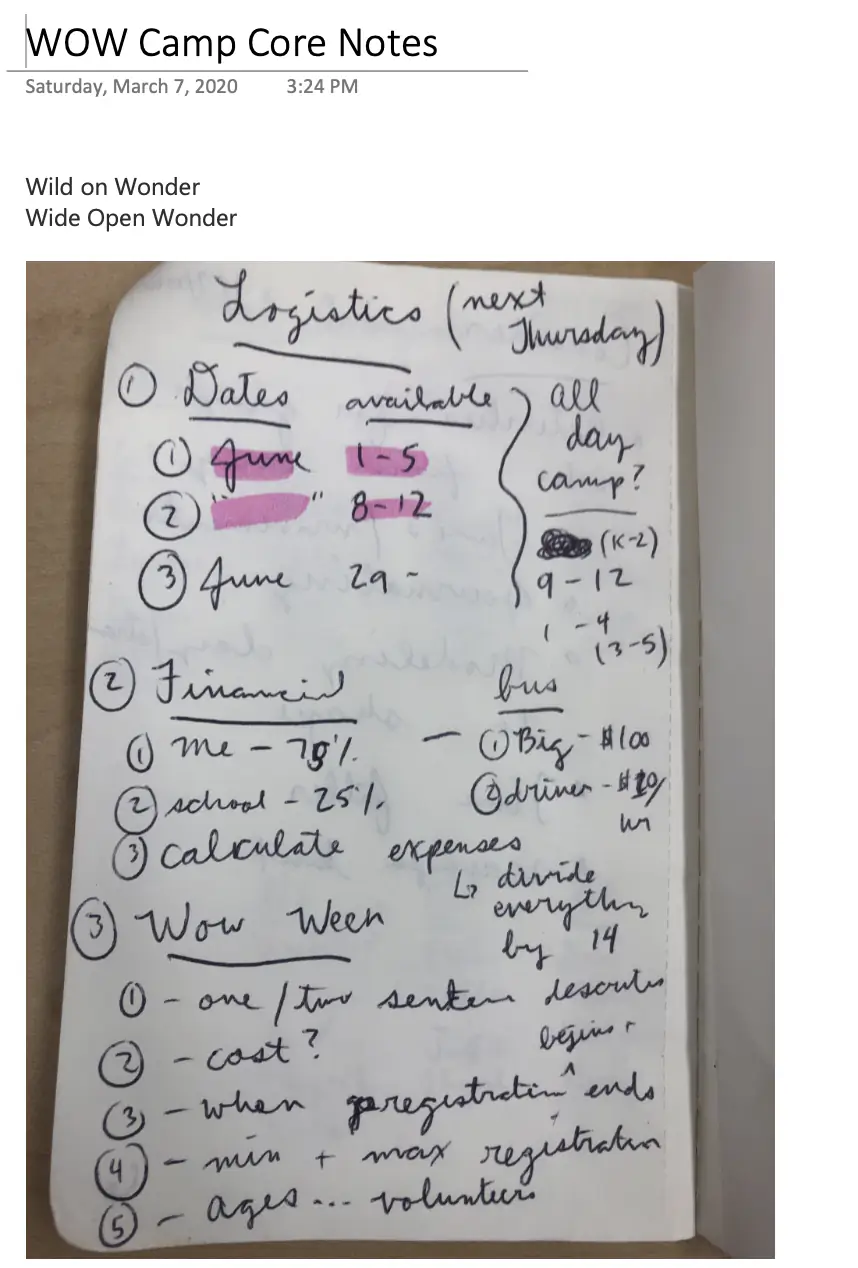
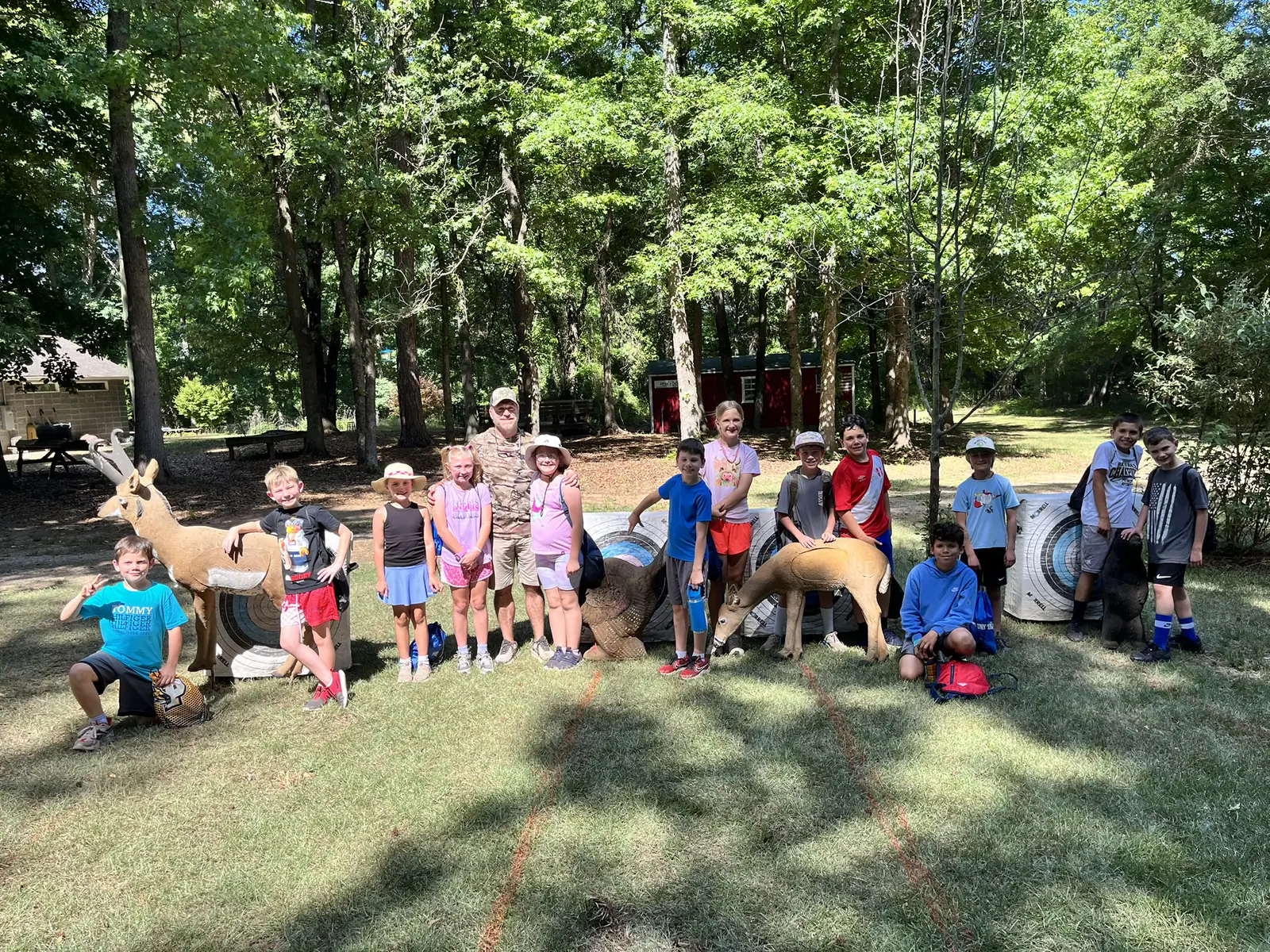
Learning is relational, not transactional. It doesn't matter what you teach them. It matters who you are to them. That's the whole reason we cap a camp at 14 when 30 would pay better.
What it looks like when it works
It's okay for me not to know right away.
She sat on the sidelines while everyone else built and told me flat out she just wasn't gonna do it. She got what my campers call the Delgado push. She didn't come to camp to watch.
She built one of the best boards in the group and themed it with candy prizes instead of point values, M&Ms and Snickers taped to the slots. She was still tweaking it after camp had ended for the day.
He picked up a box, saw an alligator in it, and built the thing himself.
He'd been to cardboard camp several times and had a pattern. If he couldn't master something right away, or watch someone do it first, he shut down and waited for help. I let him sit in it. Guides wanted to jump in, and we held off.
Eventually he picked up a box, saw an alligator in it, and built the thing himself. It was simple. It was also entirely his, and you could hear that when he explained how it worked.
This isn't a hobby. It's a teacher's life's work.
Danny Delgado spent 15 years in classrooms and libraries before he ever loaded a camper onto a bus. The method here has been documented, published, and refined across five summers.
Read the full story-
Certified educator, State of Georgia15+ years in education: high school, elementary classroom, and school librarian.
-
Question Formulation Technique certifiedRight Question Institute, in partnership with Harvard University, National Geographic, and the Library of Congress.
-
200+ campers, 20+ camp weeksFive summers of camps directed and facilitated, plus Saturday sessions.
-
Published by the Right Question Institute"WOW! Camp and the QFT: Learners Become the Heroes of their Own Journey" on rightquestion.org
Straight answers
What is an enrichment camp?
A short, themed program built around hands-on exploration rather than childcare coverage or competitive sports. Here that means one topic per week, a group capped at 14, guides who actually work in the subject, and no grades, quizzes, or assessments of any kind.
Do you really not give grades?
Really. No grades, no quizzes, no assessments, no performance metrics. Feedback happens on an I Like / Improve chart: one thing that works, one thing to try next. That's it.
Is WOW! Camp religious?
WOW! Camp is founded on Danny Delgado's Christian convictions about how kids should be seen and valued. Camp days themselves are about hands-on discovery, not religious instruction. All families are welcome here.
What if my kid is the "difficult" one?
Then you're describing about half our campers, and they're the ones this was built for. High energy and non-linear thinking are liabilities in a room of 28 kids and a bell schedule. They're assets in a group of fourteen with a real problem to solve.
Come see it for yourself.
Seven camps. Small groups.
See the Camps